

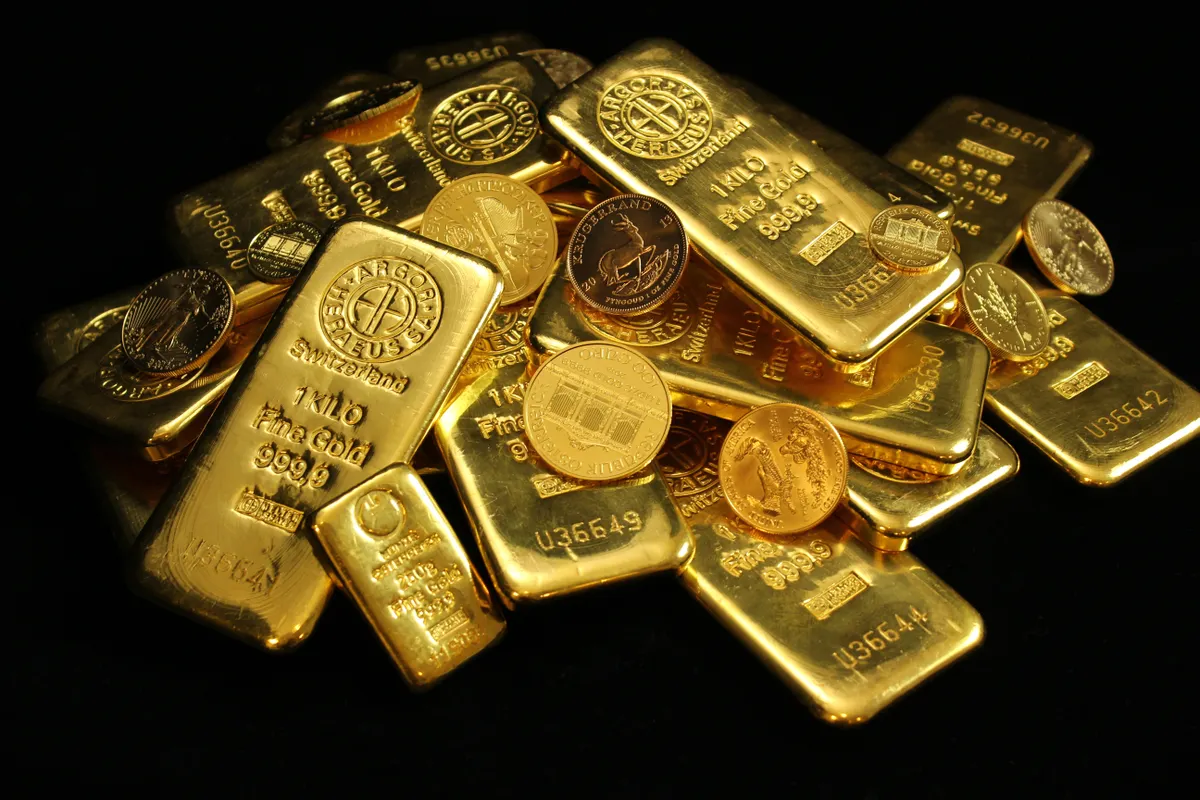

Investors watching gold prices climb and the dollar weaken have a 54-year-old policy decision as their reference point: the Nixon Shock dollar gold suspension of August 1971, when President Nixon severed the link between the greenback and bullion that had underpinned the global financial order since World War Two.
The date was 15 August 1971. In a televised address, Nixon announced that the United States would suspend the convertibility of the dollar into gold, ending the Bretton Woods monetary system and launching the era of floating exchange rates, according to Federal Reserve History.
It was described as a temporary measure. It was not.
Why the Nixon Shock Dollar Gold Decision Still Shapes Markets
Before 1971, the Bretton Woods system kept major currencies anchored to the dollar, and the dollar anchored to gold at a fixed rate. Other governments could, in theory, hand Washington dollars and receive gold in return. Nixon’s announcement broke that chain permanently.
The practical effect was that the dollar’s value became a matter of confidence rather than contract. Washington could now run larger deficits, issue more dollars, and export inflation to trading partners who held dollar reserves, all without the constraint of a fixed gold window.
For gold holders, it was the starting gun. For dollar savers, it was the beginning of a slow dilution (a reduction in the purchasing power of each unit held) that has continued in varying degrees ever since.
Schiff’s Argument, and His Commercial Interest
Much of the renewed discussion around this anniversary traces to Peter Schiff, the gold advocate who has long argued that the Nixon Shock dollar gold divorce set the dollar on a path of terminal decline. It is worth being clear about Schiff’s position: he has a direct commercial stake in this thesis. According to a 2018 filing with the Securities and Exchange Commission (SEC), Schiff co-owns Euro Pacific Asset Management, LLC, which advises the Euro Pacific Funds, a family of funds that includes a gold-focused vehicle.
That conflict does not automatically invalidate the argument. The underlying history is not disputed: Bretton Woods did end on that August evening, the dollar is no longer backed by anything beyond full faith and credit, and gold has appreciated substantially in dollar terms since 1971.
Whether the dollar’s decline becomes disorderly or merely chronic is the question that divides economists.
The Sterling Parallel Worth Considering
One lens for thinking about where the dollar may be heading is the arc of Sterling. Between roughly 1900 and 1948, the pound sterling lost its role as the world’s pre-eminent reserve currency. The process took decades, was punctuated by two world wars and repeated currency crises, and ended with Britain negotiating emergency support from Washington.
The comparison is imperfect. The US economy is larger relative to rivals than Britain’s was in its decline, the dollar’s network effects in global trade and debt markets run deeper, and Washington controls the world’s most liquid bond market. But the structural pattern, a reserve currency gradually undermined by fiscal expansion and geopolitical overreach, has obvious parallels.
Arnold Toynbee, the English historian whose 12-volume ‘A Study of History’, published between 1934 and 1961, analysed the rise and fall of 26 civilisations, argued that decline follows a recognisable sequence: creative leadership gives way to nationalism, militarism, and concentrations of power that serve narrow interests rather than the wider society. Applied to monetary history, that framework is the analogy being drawn when the Sterling comparison is made.
It is not a prediction of imminent collapse. It is an observation that reserve currencies have had expiry dates, and that the process of expiry is rarely visible clearly until it is well advanced.
What This Means for UK Savers
For ISA and SIPP holders with exposure to US equities or dollar-denominated assets, the long-run direction of the dollar against harder stores of value is a real portfolio consideration, even if the timing of any significant move is unknowable.
Gold has historically served as a hedge against dollar weakness, though it pays no dividend and can sit flat for extended periods before moving sharply. A 4% yield on a £10,000 holding in a dividend-paying equity is £400 a year in hand; gold pays nothing and its return is entirely in price appreciation. The decision to hold it is a portfolio insurance choice, not an income one.
The Federal Reserve and the SEC both publish data on dollar reserve holdings and fund disclosures that allow investors to track these dynamics independently, rather than relying on advocates with a commercial interest in one outcome.
The 54-year anniversary of Nixon’s announcement is a useful moment to revisit the monetary architecture you are saving into. The Nixon Shock dollar gold convertibility suspension, made on a single August evening in 1971, is the reference point every serious discussion of gold valuations, dollar weakness, and reserve currency risk returns to eventually.
