

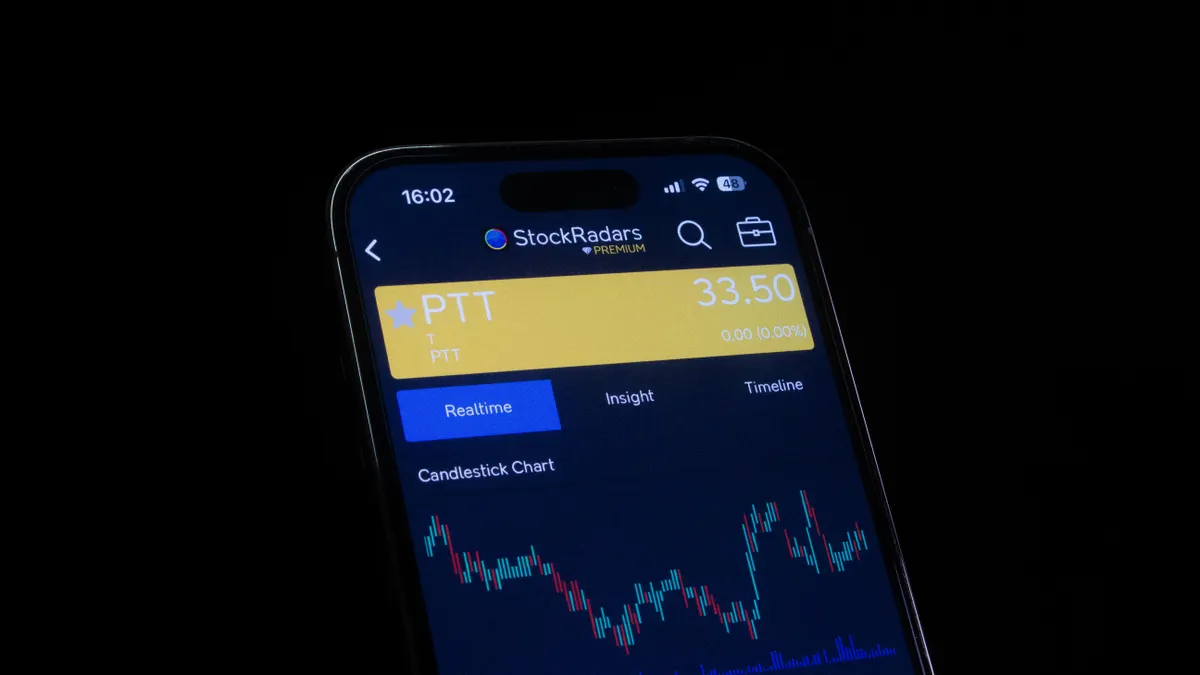

The iFOREX EBITDA outlook cut was the sharpest piece of news in a week that also brought an ownership change at London Capital Group, a major Cyprus fintech deal, and fresh questions about who is responsible when an AI agent goes wrong in a trading account. London Stock Exchange filings confirmed the broker’s revised guidance on 18 August 2026.
iFOREX EBITDA Outlook Cut: What Shareholders Need to Know
iFOREX, which joined the London Stock Exchange’s Main Market through an IPO in February 2026, now expects full-year 2026 adjusted EBITDA (earnings before interest, taxes, depreciation and amortisation, after stripping out certain one-off costs) of between $0.5 million and $2.5 million. That is a sharp step down from earlier guidance.
The trigger was a collapse in July trading income. The CFD (contract for difference) broker recorded about $720,000 in trading income for the month, down 77% from approximately $3.1 million in the same month a year earlier, according to the iFOREX trading update.
The broker attributed the shortfall partly to the yen’s sharp appreciation after coordinated US-Japan currency intervention, which moved against its net client exposure. Low market volatility in August compounded the problem.
Some operating metrics held up. New customers rose 40% year-on-year in July and deposits were 8% higher. Neither was enough to offset the income shock.
The cash position deserves attention. Net cash had fallen to about $10 million by 17 August, down from roughly $12 million at 30 June, according to Finance Magnates. Of that $10 million, approximately $4 million is ringfenced for regulatory purposes, leaving the freely available balance considerably smaller than the headline figure suggests. Shareholders holding IFRX will want to watch the pace of that cash drawdown (the rate at which cash reserves are being used) in the months ahead.
London Capital Group Changes Hands, and AI Trading Raises Hard Questions
London Capital Group (LCG) passed into the direct ownership of its own management team after Matthew Basi, the firm’s managing director, and David Worsfold, its chief executive, acquired stakes previously linked to Charles Sabet. The pair now control the Financial Conduct Authority (FCA)-regulated broker through a holding vehicle called MBDW Holdings Ltd.
The stakes came from Walder Wyss, a Swiss law firm acting for creditors following the 2024 bankruptcy of FlowBank, the Swiss bank Sabet founded. Companies House filings for London Capital Group Limited record MBDW Holdings as a person with significant control effective 18 August, and filings for MBDW Holdings Ltd show related restructuring entries dated 6 March 2026. The transaction value was not disclosed.
Basi has been associated with LCG’s management since the end of 2022, having previously held roles at IG Group and CMC Markets, as Trade Informer reported at the time of the firm’s rebrand. LCG currently operates as an exclusive introducing broker for IG.
Separately, Cyprus-based payments company payabl. reportedly agreed to sell a 50% stake to private equity firm ECM Partners in a transaction exceeding €100 million. Group CEO Ugnė Buračienė retains the remaining half and stays in her role. The deal would rank among the largest fintech transactions in Cyprus by value.
On AI trading, the regulatory picture remains unclear. Robinhood has told Finance Magnates that customers bear responsibility for how their AI agents are built and the actions those agents take. In the first few weeks of agentic trading on the platform, more than 50,000 customers opened agentic accounts and began trading equities and options. Lawyers and regulatory experts expect brokers to face greater duties as the technology spreads. Proposed safeguards include kill switches, circuit breakers, and possible future “Know Your Agent” requirements analogous to existing customer due-diligence rules.
Capital.com Splits UAE Crypto From CFDs, and OKX Gains From Binance’s Exit
Capital.com will serve UAE clients wanting spot crypto through a separately licensed affiliate, Capital Vault UAE, rather than through its existing CFD structure. Capital Vault secured a full federal virtual-asset licence from the UAE Capital Market Authority (CMA), making it among the first firms authorised under a framework introduced in April 2026 that expanded regulated virtual-asset activities from three to eight categories, covering conduct, anti-money-laundering and prudential standards, according to Clyde and Co.
Rahul Kumar serves as CEO of Capital Vault UAE, which operates from Abu Dhabi. Client virtual assets will be held under CMA client-asset rules, with Capital Vault providing execution, custody and settlement, as reported by Financial IT and confirmed by CryptoNews. Clients will access both crypto and CFD services through the same Capital.com app, though the regulatory and operational structures behind them are distinct. No launch date has been set.
OKX Europe reported that app downloads rose almost 160% in the 12 days after Binance withdrew its MiCA (Markets in Crypto-Assets Regulation) licence application in Greece and halted new EU client onboarding, with inflows from Binance-linked accounts rising more than eightfold. OKX Europe CEO Erald Ghoos estimated that 95% of European crypto derivatives volume still sits outside regulated EU venues, and said bringing it onshore requires both regulatory enforcement against offshore platforms and licensed exchanges broadening their product range.
For investors tracking the CFD and retail-broker sector, the iFOREX numbers serve as a reminder of how quickly a single macro event, here the yen move in July, can rip through a broker’s revenue line. The next trading update from IFRX will indicate whether August’s low-volatility headwind has eased.
