

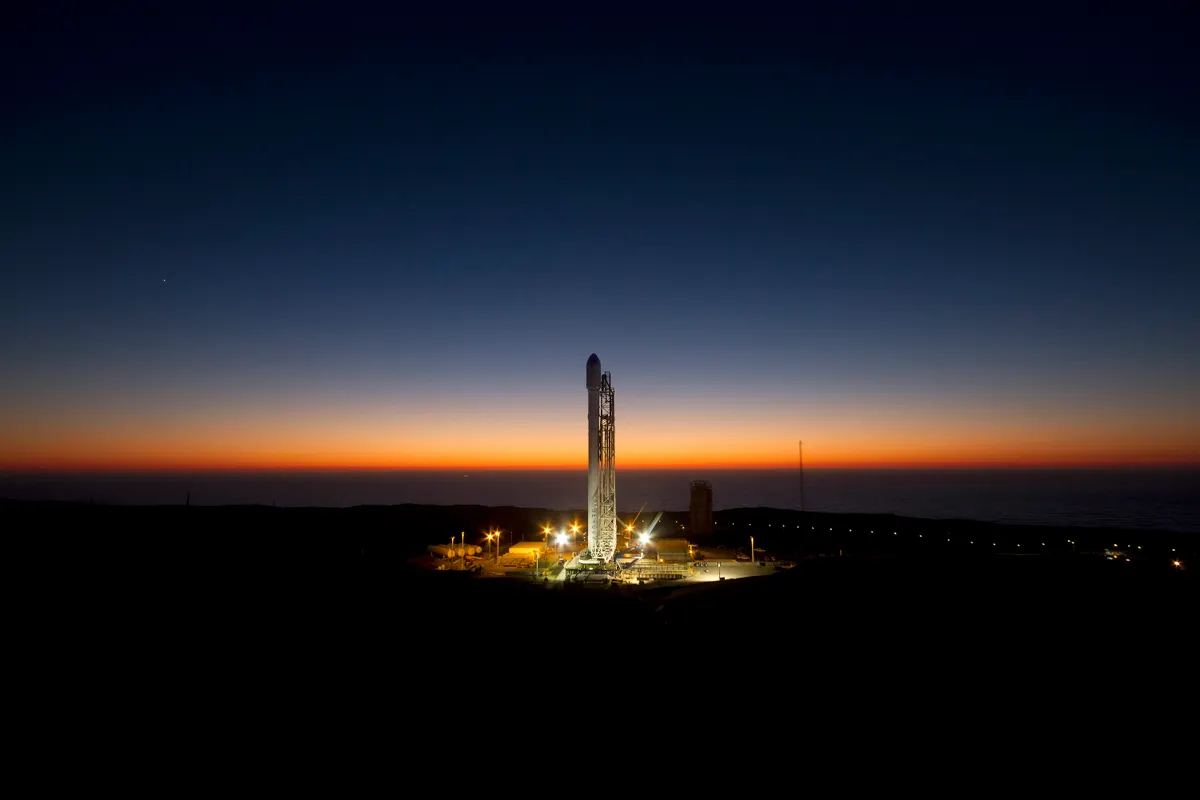

SpaceX futures trading volume on MEXC exceeded $7.1 billion in USDT in the weeks following SpaceX’s listing on 12 June, according to the exchange’s own second-quarter report. The figure has not been independently audited.
The headline number is eye-catching, but the fuller picture from MEXC’s Q2 report raises questions the report itself does not answer.
SpaceX as the Test Case for a Full Equity Stack
MEXC positioned itself to sell a SpaceX-linked product at every stage of the company’s journey from private to publicly traded. While SpaceX was still private, the exchange ran two SPACEX(PRE) subscription rounds, collecting over 173 million USDT from more than 74,000 entries. After listing, users could trade perpetual futures (contracts with no expiry date that use periodic funding payments to stay close to the underlying price), hold a tokenised version of the share, or buy the actual stock.
That last option arrived through RealStocks, which launched on 1 June. The service routes orders for real US shares and ETFs through a licensed broker partner, giving buyers actual dividend entitlement rather than pure price exposure. More than 120,000 users signed up in the first month and 52% funded an account, the company said. By 18 June, MEXC had settled dividends on 34 stocks and ETFs.
The exchange has not named the broker, disclosed custody arrangements, or explained how USDT is converted to dollars for settlement.
Stock futures drove much of the equity flow beyond SpaceX. Micron’s June earnings results lifted MU futures volume on MEXC by roughly 142% in a single session, the company said, with spillover into SanDisk, SK hynix and a DRAM ETF. ‘Q2 put real numbers behind the word gateway,’ said Vugar Usi, who became chief executive during the quarter.
SpaceX Futures Trading Volume and the Omitted Refund
MEXC’s Launchpad section reports that SPACEX(PRE) traded 12% above its subscription price at listing and reached a 38% peak return. It says nothing about what happened next.
On 12 June, MEXC cancelled tokenised SpaceX allocations and returned funds to subscribers, alongside Binance, Bybit and Bitget Wallet. All four had been reselling access to allocations that Kraken’s tokenisation arm had promised to source. When Kraken’s xStocks came up empty, so did every platform relying on it as the sole supplier.
Demand was never the problem. Binance’s SpaceX campaign attracted more than $557 million in USDC before it was pulled. MEXC’s first round ran 15.5 times oversubscribed. The underlying shares simply never arrived.
Despite this, Kraken‘s xStocks business continues to expand. The brand has passed $25 billion in cumulative transaction volume across less than eight months of operation, listed on Deutsche Börse’s 360X venue, and now accounts for eight of the eleven largest tokenised equity instruments by volume. The company has also announced an acquisition of Backed, which it says will accelerate xStocks expansion and unlock global demand for tokenised equities.
Competitors and Regulators Are Both Moving
MEXC is not alone in building what amounts to a crypto-native brokerage. Binance opened access to roughly 7,000 US stocks on 1 June, routing orders through broker-dealer Nest Trading with Alpaca handling custody and corporate actions. Fractional purchases start at $5, funded in USDC, USDT or BNB. Coinbase has publicly described its version as an ‘Everything Exchange’ covering crypto, stocks, derivatives and event contracts.
The perpetual contract format is now crossing into traditional finance from the other direction. Pepperstone said this week it would extend its perpetual CFD range to metals, stock indices and energy, adding gold, silver, Nasdaq, S&P 500, WTI and Brent contracts. ‘We believe perpetual markets will become a standard feature of modern finance,’ Pepperstone group chief executive Tamas Szabo said. European regulators have already ruled that perpetual futures fall under EU CFD rules, bringing them inside the same retail leverage caps that MEXC’s offshore structure currently avoids.
MEXC’s regulatory position adds a layer of risk for prospective users. Hong Kong’s Securities and Futures Commission (SFC) issued a formal warning against the exchange in 2024, stating that operating a virtual asset exchange or actively marketing such services to Hong Kong investors without a licence constitutes an offence under the Anti-Money Laundering and Counter-Terrorist Financing Ordinance. MEXC entered July without a MiCA (the EU’s Markets in Crypto-Assets regulation) licence and with no public update on its application, even though its published list of restricted jurisdictions does not include EU member states.
MEXC reported a June reserve ratio of 156.5% across major assets, with bitcoin backed at 269%, and said its futures insurance fund reached $753 million in July. Both figures come from the exchange itself and have not been verified by an outside auditor.
Tokenised equity products of this kind are closed to US persons. Kraken’s SpaceX token also excluded users in the UK, Canada and Australia. The MiCA licensing gap means European investors face a similar wall if regulators act on the existing regime before MEXC secures approval.
