

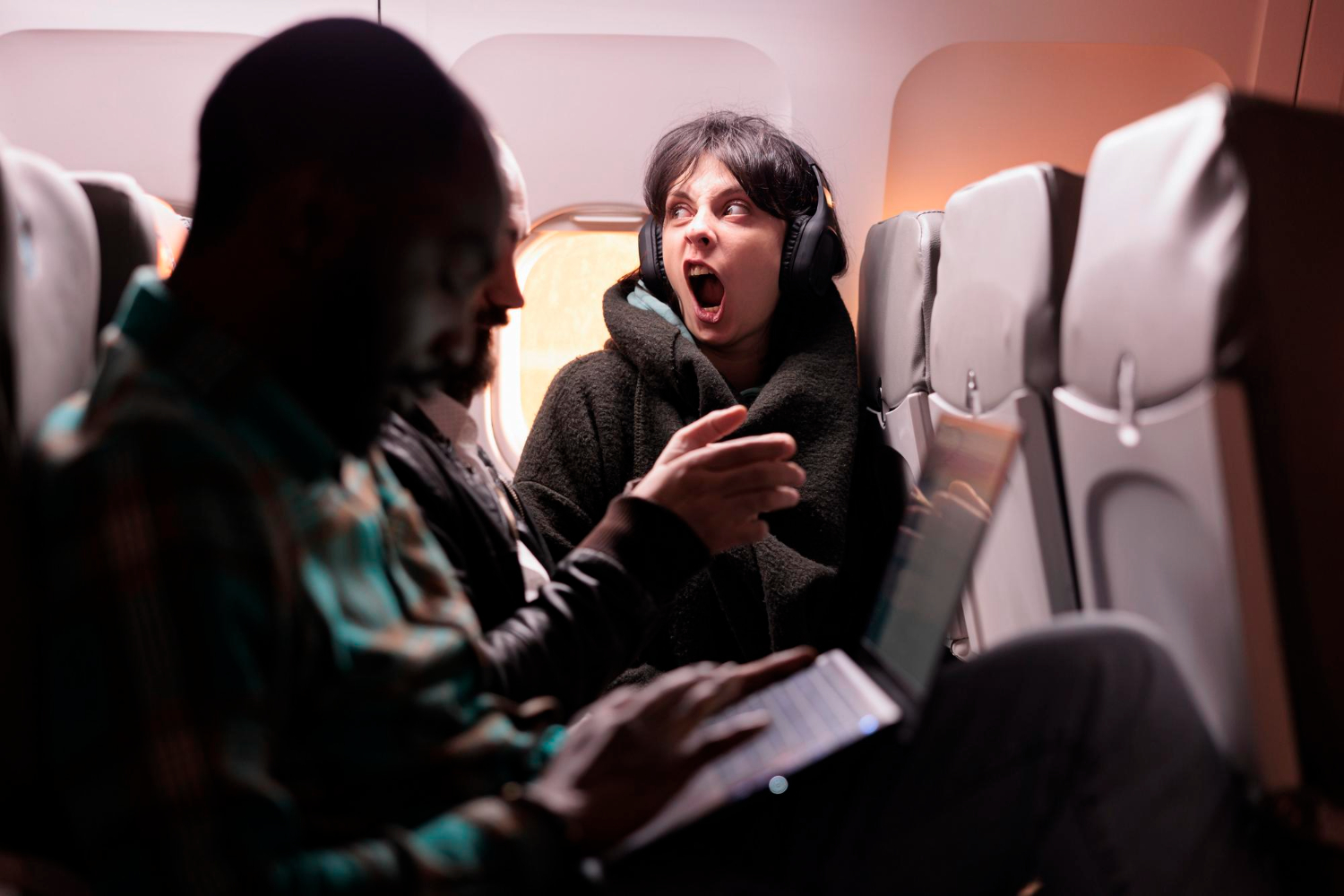

Last spring, a woman in the LaGuardia boarding line sighed as she looked down at her boarding pass. “So this is premium, huh?” Eyeing the thin blue seatbacks that bore a striking resemblance to those behind them, she muttered. It wasn’t just her who was perplexed. A couple in front of me, who appeared to be recent retirees based on the AARP tote, asked out loud why their “premium” upgrade did not include a meal. or a cushion. Or, clearly, any real feeling of superiority.
The distinction between coach and first class has subtly expanded into a confusing web of marketing jargon and mid-tier choices. JetBlue advertises “Even More Space,” United offers “Premium Plus,” Delta offers “Comfort+,” and low-cost airlines now offer “Big Front Seats” or “Priority Bundles.” Although the language is flawless, the meaning has become hazy.
| Feature | Description |
|---|---|
| Core Trend | Airlines are redefining “premium” by adding more tiers and amenities |
| Passenger Response | Customers increasingly skeptical about what higher fares actually deliver |
| Industry Shift | Legacy and low-cost carriers alike now offering tiered premium experiences |
| Economic Context | Rising wealth inequality fuels premium demand despite crowded economy cabins |
| Notable Carriers | Delta, United, American, Frontier, Spirit, JetBlue, Southwest |
| Key Passenger Concerns | Transparency, seating space, pricing fairness, value-for-money |
| External Reference | USA Today Column on Airline Premium Trends |
Airlines have developed a very ingenious tactic by redefining premium, which enables them to offer marginally better seats at much higher costs. However, the trust deficit is widening as more passengers—especially frequent leisure travelers—get the hang of it.
Aware that business travel might not return to pre-2020 levels, airline executives revised their long-term plans during the pandemic. The “premium leisure” segment—vacationers who had extra cash to spend and were prepared to pay more for comfort, even if they weren’t business-class devotees—was born. That group has supported airline earnings in recent years, leading to new seat arrangements and upselling strategies.
However, a lot of those comfort-seeking tourists are no longer certain they are receiving value for their money.
Despite the plane being half empty, a group of church volunteers on a recent flight from Houston to Honduras were informed they would have to pay $86 apiece to move into empty Economy Plus rows. Three rows remained empty as they remained crammed together. After landing, I was told by one of the group leaders, who was clearly irritated, “We weren’t asking for champagne — just not to be squeezed like toothpaste.”
Passengers could spread out if a flight wasn’t full, according to an unwritten rule that existed for decades. Protected revenue is now represented by those vacant seats. Moving into them for free is compared by some carriers to “taking a luxury car for free.” It’s a startling analogy, but it fails to acknowledge the fact that people are actually on board, paying, and just moving around in a cabin.
However, airlines have doubled down despite this pricing rigidity.
Airlines have made their revenue models extremely efficient, but also noticeably opaque, by combining dynamic pricing, artificial intelligence, and loyalty status algorithms with cabin upgrades. According to a recent statement from a Delta executive, the airline anticipates that revenue from premium seats will completely outpace that of the main cabin by 2027. That estimate highlights the extent to which airlines have become reliant on passengers’ willingness to pay for comfort that may only slightly surpasses basic economy.
This change is being driven by economic realities as well as marketing. While middle-income households have not increased their wealth since 2019, the wealthiest 20% of American households have increased by $35 trillion. Even though planes seem more crowded, that disparity increases demand for luxury travel. For many, paying more for a quieter cabin or more legroom is an escape from discomfort rather than a luxury.
However, the meaning of “premium” appears to be becoming more ambiguous. Former leaders of the ultra-low-cost model, Frontier and Spirit now provide seating packages with benefits similar to those of full-service airlines. Under new management, JetBlue is reconsidering its routes and postponing aircraft orders in order to concentrate on its primary goal of providing comfort without going bankrupt. Even Southwest, which has long been the epitome of uncomplicated, egalitarian travel, is discreetly switching from open-seating to assigned seats. “There’s a clear preference for more premium — whatever that means to each traveler,” said CEO Robert Jordan.
Part of the issue is that ambiguity.
Passengers are left to figure out what they’re really getting when “premium” includes anything from an extra three inches of legroom to a lie-flat suite with champagne and pajamas. And a lot of people are calculating.
On a recent cross-country flight, the financial analyst sitting next to me remarked, “I used to upgrade automatically.” “I now look at SeatGuru, read reviews, and contrast what I’ll actually receive. It’s worth it sometimes. Sometimes it’s just a fancy name for row 10.
This increased scrutiny is reflected in online forums. Hundreds of comments are frequently left on Reddit threads concerning Delta’s Comfort+ program, many of which bemoan the discrepancy between price and value. Premium economy is mockingly referred to by some tourists as “economy with better branding.” Others offer tips for identifying the infrequent flights where upgrades seem warranted, such as those that travel internationally and have actual business-class cabins.
However, for every unhappy flyer, there are others who view even the smallest benefit as a victory. For travelers under pressure from long workweeks and tight connections, a drink on a short-haul flight, priority in the overhead bin, or a quicker boarding group can still make all the difference. Airlines are aware of this and make adjustments accordingly.
Carriers use data analytics to fine-tune fare structures in real time, modifying seat prices according to traveler profiles, demand trends, and seasonality. Even though the actual experience stays the same or is only slightly better, they are able to extract more revenue per passenger thanks to that level of precision.
Although it is a very successful business strategy, there is a risk to one’s reputation. Frustration increases when expectations exceed delivery, particularly when a “premium” label is applied. This conflict is already evident, especially among devoted clients who feel that they are being priced out of upgrades that they used to take for granted.
However, the way passengers have begun responding to each other may be more telling than the size of the seats or the meal tray. Travelers are speaking out more about what they want and what they will no longer accept, from criticism on social media to in-flight conflicts. Some people even completely abandon loyalty programs because they are unwilling to pursue benefits that seem more and more meaningless.
Flying has always been an odd combination of perseverance and ambition. Perhaps what’s evolving is how clearly passengers perceive the value exchange. Airlines have redefined premium while also changing the expectations of their customers, and once they are let down, they rarely come back unaltered.
