

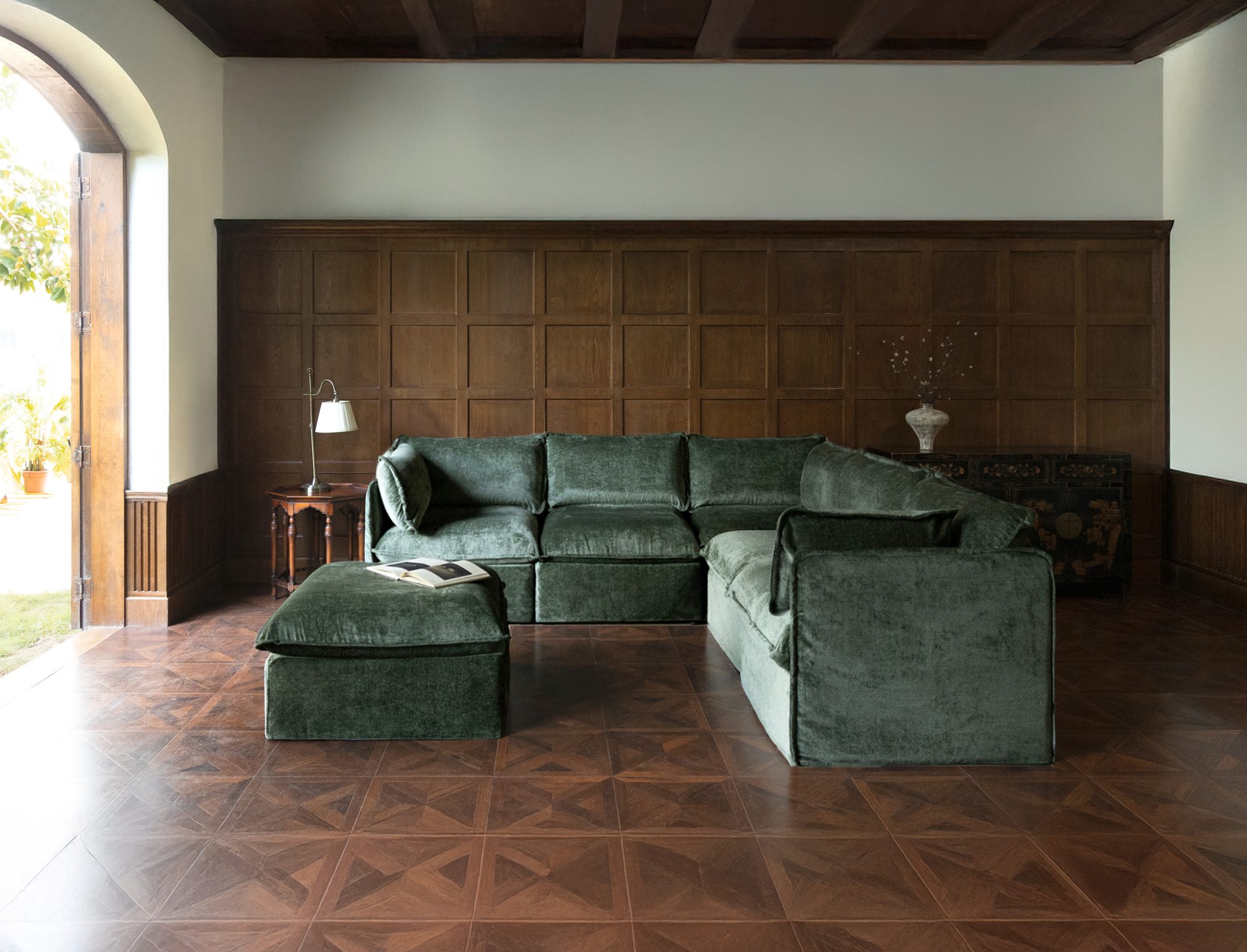

Anabei builds its sofas so that every cover can be stripped away and run through a home washer. That design call, still unusual among mainstream furniture makers, is why the brand keeps surfacing in searches for washable, family-friendly seating. Shoppers’ questions then follow a predictable order. What is the sofa made from? How does it cope with daily life? Which company is behind it? The rising number of Anabei reviews tracks that same thought process, as buyers set comfort and looks against durability, cleanup, and what a sofa costs over its lifetime.
Cushion Covers, Frame Covers, and the Washing Machine
Full washability is the trait that defines the collection. Cushion covers and frame covers alike are removable and safe for the washing machine, an approach that few mainstream brands have carried across a whole product line. For homes with children or pets, where a spill or stain is part of an ordinary week, the benefit is easy to see.
Laundering Instead of Replacing
Washability makes a cost case too. Covers cleaned at home, rather than sent out for treatment or replaced, keep the sofa usable longer and cheaper to own. The company frames the removable, washable covers on Anabei sofas as a sensible alternative to getting rid of a sofa as soon as it starts to look worn.
CABA Design and the Company Behind the Covers
Anabei sells furniture straight to consumers and was set up under CABA Design, its parent, which brings a track record across design work, manufacturing, and supply chain management. Skipping retail showrooms lets the brand avoid the markup traditional furniture stores build into a sofa’s price. Configurations start at $699.
For anyone comparing Anabei reviews, that parent company adds credibility. Through CABA Design’s manufacturing footprint, Anabei has direct oversight of materials, construction, and quality assurance, plus the shorter lead times a direct-to-consumer operation allows. The same structure helps explain why washability and modularity are built into the core of the line instead of being sold as add-ons.
Steel, Foam, and What Sits Under the Fabric
The frames underneath the upholstery are powder-coated steel, not the engineered wood or particleboard that tends to appear at lower prices. The powder coating gives the metal a tough finish that holds up against chipping and corrosion, and the steel itself is meant to handle years of daily sitting without loosening or sagging.
Review readers care most about these structural points, since they want to know if a sofa will keep its shape. The steel is paired with cushion choices in high-resilience foam, made to keep their form and their support across long stretches of everyday use. Add covers that can be replaced, and the overall design points toward a sofa meant to be looked after rather than discarded.
Upholstery That Resists Before It Gets Washed
The upholstery itself is a performance fabric, so its resistance to liquids, stains, and abrasion is engineered in rather than added later with a spray-on treatment. Pet-friendly options respond to a concern the category often overlooks: ordinary upholstery can hold on to hair, soak up odors, and show claw marks in short order.
A performance fabric is judged by its daily behavior, and this is where machine-washable sofas prove their worth. When the cover comes off and goes through the laundry, a spill turns into a wash cycle instead of a lasting mark. That shift matters to buyers who have steered clear of light-colored or upholstered seating in the past.
Sections That Separate, Covers That Swap
The system is modular as well. Seats and sections join together and come apart, which lets a layout grow, shrink, or take a new shape when a household relocates or its needs change. That solves a familiar problem for furniture buyers: the sofa that fit one apartment perfectly often doesn’t suit the floor plan of the next home.
Seen from that angle, a modular sofa is closer to a long-term investment that changes along with its owners than to a one-time transaction. Replaceable covers support the same idea. A cover that is worn or out of style can be exchanged while the frame stays in service, and more modules can be added when the living space gets bigger.
Living With It After the Order
Owning the sofa involves more than placing the order. It ships in manageably sized boxes for assembly at home. After that, covers come off for washing whenever needed, and modules can be moved around when a room is rearranged. Upkeep is routine instead of specialized, and that is a large part of the practical pitch Anabei makes to its audience: families, households with pets, and homeowners who care about design.
People looking into the brand usually want that complete view. They care about its appearance fresh out of the box, and also about how it holds up after a year of dinners, pets, and constant traffic through the room. Coverage that walks through delivery, washing, and reconfiguring the layout tends to address the very questions that send people searching for reviews, and offers more context than a star rating or one-line comment.
About Anabei
Anabei is a direct-to-consumer furniture brand that operates under parent company CABA Design. It specializes in machine-washable, modular sofa systems built on powder-coated steel frames and upholstered in performance fabrics designed for homes with children and pets. Backed by CABA Design’s experience in design and manufacturing, the brand concentrates on furniture engineered for everyday durability and long-term flexibility. Details on Anabei’s machine-washable sofas are available through the company’s direct-to-consumer storefront.
