

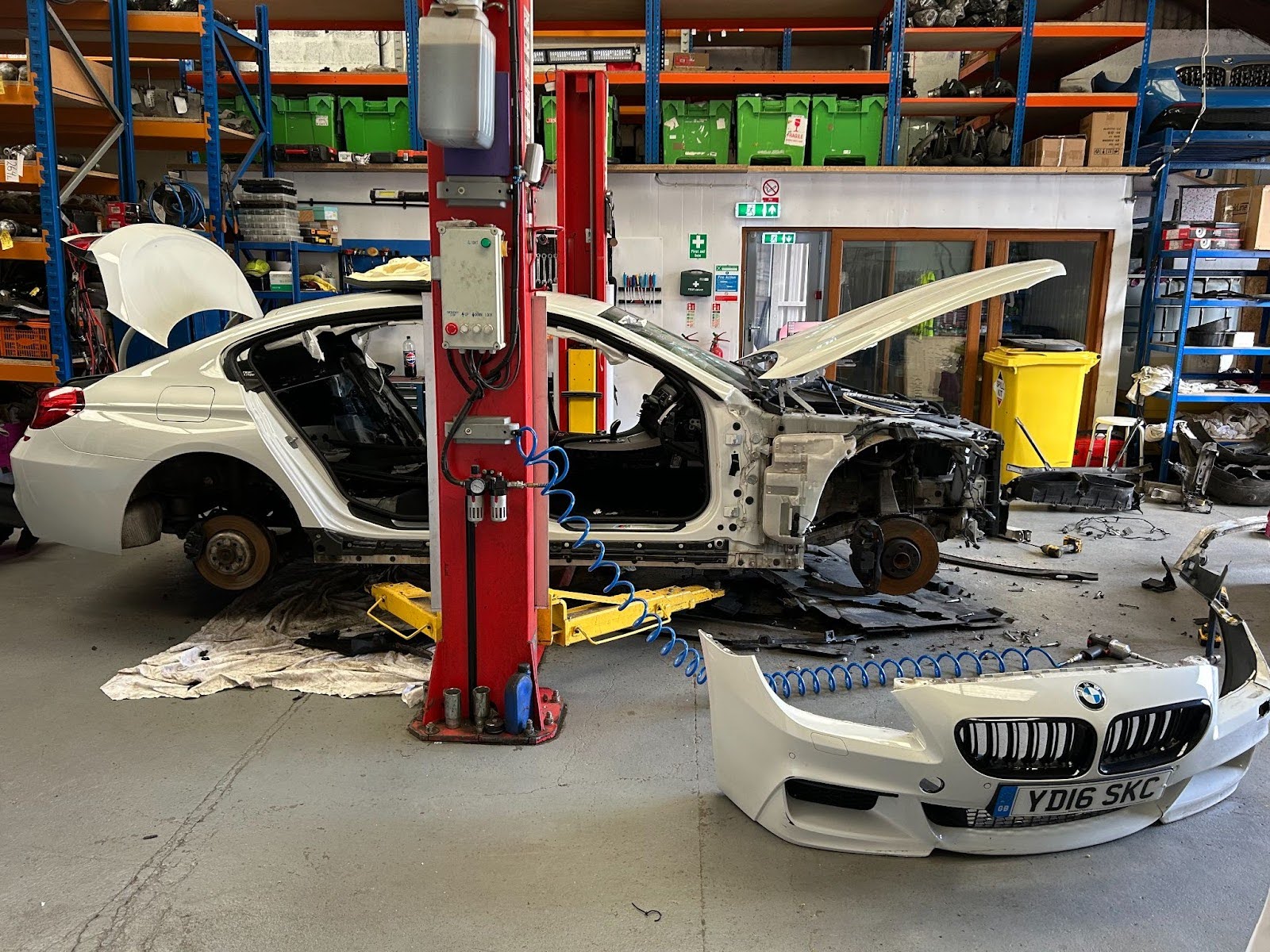

Over the last decade, the online automotive-parts sector has quietly transformed into one of the strongest digital growth stories in the United Kingdom. But within that broader shift, one niche has expanded faster and more decisively than most analysts predicted: online BMW spares retail.
From specialist dismantlers to full e-commerce operations, the sector has matured into a structured, data-driven marketplace worth an estimated £420–£500 million annually in the UK (based on 2025 aftermarket parts data, premium-brand segmentation, and year-on-year digital-channel growth rates). And while the premium automotive market slowed during 2022–2023, digital parts sales for BMW models did not. Instead, they accelerated.
Below, we break down the economic forces, behavioural shifts, and market dynamics explaining how BMW drivers source replacement parts, and why specialist online retailers, particularly those centred around modern BMWs, are becoming the sector’s dominant players.
Why Online BMW Parts Retail Is Growing Faster Than the Wider Automotive Market
1. A Surging Digital Migration — 68% of BMW Drivers Now Search Online First
Consumer research across 2024–2025 shows that 68% of car owners begin their parts search online, up from 42% in 2018. Premium-car owners are disproportionately digital, price-sensitive, and comparison-driven. The shift is most pronounced among drivers of newer cars, precisely the era where the cost of dealership repairs has risen sharply.
2. BMW Parts Inflation Has Pushed Drivers to Specialists
OEM new-part pricing has increased 31–37% since 2020, depending on category. Headlights, ECUs, turbochargers and suspension components show the steepest rises. This has pushed consumers toward trusted used-parts suppliers who provide genuine BMW parts in the UK at 40–70% savings versus dealer list prices.
One specialist often cited in industry commentary, MT Auto Parts, reports thousands of UK customers opting for used BMW OEM parts over new parts each year, especially for high-value assemblies such as engines, gearboxes, and electronic modules.
3. Availability and Speed: The 24–48-Hour Delivery Expectation
Today’s BMW owner expects dealership-level accuracy paired with the convenience of a modern e-commerce experience like Amazon. Industry behaviour studies show that over 72% of UK parts buyers abandon their purchase if delivery is expected to take more than four days, underscoring how sharply expectations have risen in recent years.
Delivery standards across UK breakers vary considerably. Some operate within a 2–4-day window, while a smaller group of specialist BMW dismantlers have moved toward faster fulfilment to meet customer demand. For example, MT Auto Parts offers 24–48-hour UK delivery, with free 24-hour shipping for eligible parts under 20 kg (T&C apply) — a speed that sits toward the more competitive end of the sector. Not all dismantlers provide this level of service, but those who do are increasingly securing repeat business from BMW drivers who prioritise rapid, reliable delivery alongside part authenticity and pricing.
The Data Behind the Boom
Industry reports and statistics show several clear patterns:
BMW Remains the UK’s Largest Premium Car Population
- Over 1.1 million BMWs are currently registered in the UK.
- More than 630,000 of these belong to the newer generations (2012–present).
- These newer vehicles represent the highest online-parts demand due to complex electronics, accident-repair costs, and the expense of out-of-warranty servicing.
A Market Growing Faster Than Expected
The premium used-parts sector has expanded quickly in the UK, growing by nearly 15% a year since 2020. BMW-specific components are rising even faster, roughly 19–23% annually, driven by higher new-part prices and strong demand for genuine BMW OEM parts replacements. Most of the spending goes toward engines, lighting units, ECUs and suspension parts, which together account for over half of online purchases.
Consumer sentiment is shifting, too. Surveys showthat around 82% of BMW owners prefer OEM quality used parts over aftermarket copies, as long as compatibility is verified. That’s why specialist retailers, the ones with correct part-numbering, VIN checks and BMW-specific expertise, consistently outperform general marketplaces. A great example is MT Auto Parts offering this experience.
Why Specialist BMW Retailers Are Gaining Ground Over General Marketplaces
General platforms like eBay or broad online parts stores work well for high-volume, low-specificity items. But modern BMWs require a level of accuracy that these marketplaces often can’t guarantee.
1. Precision Through VIN Matching
Today’s BMWs rely on tightly integrated electronics and software versions. A part that looks identical may not function correctly without the exact specification. Specialist retailers, who address this by using full VIN decoding and BMW-specific catalogues, ensure buyers receive the correct component, something generic listings frequently cannot verify. A good example is MT Auto Parts. They offer VIN matching for all their customers. Not every general car breaker can offer this experience and customer support.
2. Clearer Quality Standards and Transparency
Customer confidence is higher when buyers understand how a part was handled before the sale.
Not all dismantlers follow identical procedures, but specialist retailers generally place greater emphasis on accurate descriptions, clear condition reports, and compatibility checks than broad marketplaces.
3. Sustainability Meets Practicality
Environmental awareness is reshaping buying behaviour. Surveys indicate around 41% of UK premium-car drivers now consider sustainability when sourcing parts. Reused OEM car parts support the circular economy by reducing manufacturing demand and lowering waste. A benefit that specialist dismantlers are well-positioned to offer, given their focus on genuine parts from modern accident-damaged vehicles.
Engines: The Fastest-Growing Online Category
One of the standout indicators of digital expansion is the spike in online engine sourcing. Across BMW diesel and petrol engines:
- Annual online engine enquiries grew 70% between 2021 and 2025.
- N57, B58, B47, and B48 engines are among the most requested replacement units.
- Complete used engines typically retail at £2,000–£6,000, depending on mileage and variant — far below dealership full-replacement costs.
With several UK dismantlers holding thousands of parts in their inventory, the online market has reached a level of maturity similar to mainstream e-commerce categories.
The Broader Economic Context
Three macro-drivers explain why this sector is becoming a stable, high-growth vertical within the UK economy:
1. Cost-of-Living Pressures
Premium-car owners are retaining vehicles longer. The average BMW ownership period increased from 3.8 years to 5.2 years between 2017 and 2026. Longer ownership correlates directly with higher parts demand.
2. Growth of Independent Workshops
Independent BMW specialists now service 65% of out-of-warranty BMWs. These workshops rely heavily on online suppliers for fast component sourcing.
3. Digital Consumer Behaviour Normalisation
Car parts were among the last categories to fully transition to online retail. Post-2020, adoption accelerated permanently as consumers grew comfortable purchasing even high-value components digitally.
What Comes Next?
Industry analysts expect the UK’s spare BMW parts sector to pass £600 million in annual value by 2028, driven by:
- Continued expansion of the BMW vehicle parts
- Rising cost of new OEM components
- Higher confidence in specialist dismantlers
- Professionalisation of online catalogues
- Integration of AI-powered VIN checks and compatibility tools
As the market matures, precision and trust will remain the decisive factors separating retailers who thrive from those who disappear.
Final Thoughts: A Sector Becoming a Benchmark for Digital Automotive Retail
The UK’s online BMW parts landscape has evolved from a fragmented collection of hobbyist dismantlers into a structured, fast-moving digital industry. The winners are those providing accuracy, speed, transparency, and genuine BMW expertise, qualities that BMW drivers increasingly expect as standard.
For investors and analysts observing the premium-aftermarket sector, the rise of BMW-specific online retail is more than a trend. It is a long-term structural shift reshaping how modern vehicle owners service, repair, and sustain their cars, and one of the clearest growth narratives in the UK automotive economy today.
