

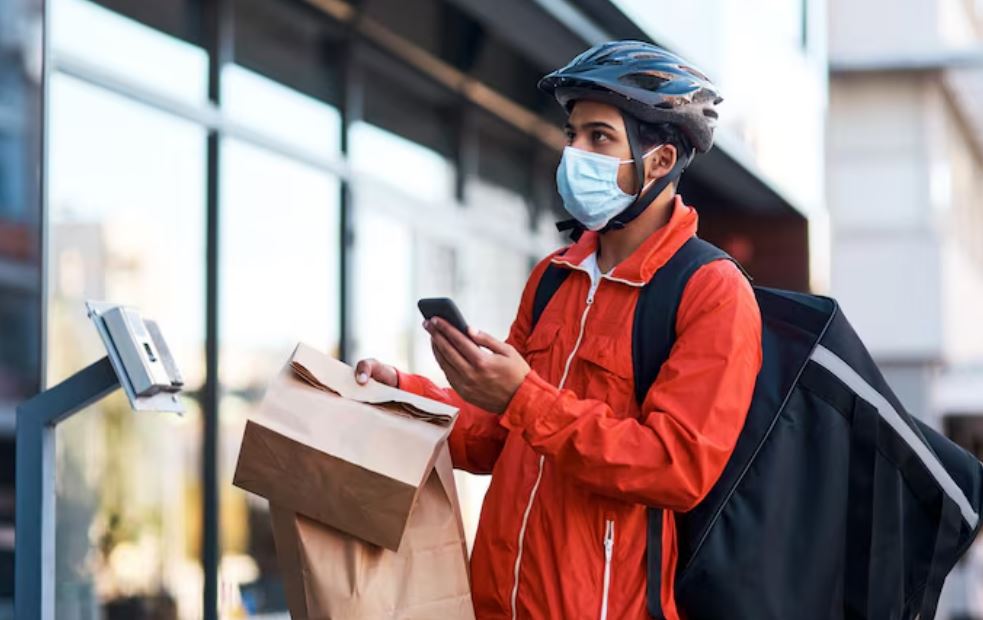

Retailers are literally moving at breakneck speed. In an effort to deliver goods to your door before the next coffee break ends, every big brand, including Amazon and Walmart, is turning delivery into a race against the clock. This has to do with psychology, not just logistics. Waiting even a day seems archaic to consumers who are used to instant gratification. Expectations have significantly changed in recent years, and the retail sector has been rushing to keep up.
Amazon continues to be a particularly notable leader in this transition. Over five billion packages were delivered the same day or the following day this year, according to CEO Andy Jassy’s proud report. That speed is not only feasible but also anticipated thanks to the company’s extensive infrastructure, which is driven by automation and artificial intelligence. Every Amazon click is more than just an order; it’s a moving algorithm that predicts, sorts, and routes in a matter of seconds.
| Aspect | Details |
|---|---|
| Primary Drivers | AI logistics, automation, and micro-fulfillment centers |
| Industry Leaders | Amazon, Walmart, Target |
| Delivery Target | 30 minutes to 2 hours |
| Key Strategies | Ship-from-store, local hubs, and gig delivery networks |
| Challenges | High costs, sustainability, logistics complexity |
| Societal Impact | Redefines convenience, reshapes consumer expectations |
| Reference Source | PYMNTS.com |
Walmart, always the rival, has responded with an approach that seems incredibly effective. Without constructing new warehouses, it has drastically shortened delivery times by turning its thousands of stores into regional distribution centers. Over 55 million orders were processed by its one-hour delivery service in China in the last quarter, and same-day deliveries in India increased by more than 150%. These numbers demonstrate the extent to which convenience has permeated every aspect of our lives; they are more than just numbers.
A very intricate ballet of logistics and technology lies behind the glitzy promise of instant delivery. Micro-fulfillment centers, which are small, technologically advanced storage facilities situated near city centers, are the main facilitators. The “last mile,” which has historically been the slowest and most expensive delivery segment, is eliminated by these robotically powered dark stores. Businesses are converting local neighborhoods into distribution grids by putting goods within urban consumers’ reach.
This change is now being driven silently by artificial intelligence. Artificial intelligence (AI) systems make sure that goods flow through cities like synchronized energy currents by predicting demand and optimizing routes. Its ability to combine data from various sources, including weather forecasts, inventory systems, and even traffic conditions, to make decisions in real time is especially creative. Like a symphony where every note lands exactly on time, the process is extremely efficient, minimizing wasted effort and maximizing speed.
But there are difficulties in the race for speed. According to retail consultant Ralph Asher, a remarkable number of fulfillment hubs—sometimes thirty or more within a single metro area—would be necessary to achieve 15-minute delivery. The financial and environmental costs are significantly increased by this density. More labor, more packaging, and more cars on the road all add up. Nevertheless, the desire for immediacy among consumers appears to be unquenchable in spite of these obstacles.
The way that this new delivery era reflects cultural changes outside of retail is astounding. It reflects the ways in which digital media has supplanted print, streaming services have supplanted television, and on-demand culture has redefined patience. Retailers are the bankers of convenience, which has turned into money. Even though Amazon and Walmart are industry titans, startups like Instacart, DoorDash, and Ohi are demonstrating that speed isn’t just for the big guys. They are employing adaptable, gig-based courier services that are becoming more dependable for clients and surprisingly inexpensive for smaller companies.
This industrial race has a glamorous side as well. Through retail logistics, influencers and celebrities are now directly influencing consumer behavior. To ensure almost immediate availability, Kylie Jenner carefully plans the distribution of her skincare drops across a number of channels. Pop culture and logistics have thus become entangled. The “launch” has been replaced by the “drop,” and the clock begins to run as soon as a link goes live.
However, beneath this dynamic exterior, moral dilemmas are emerging. There are serious environmental repercussions to the increasing demand for same-day or next-hour delivery. When compared to consolidated shipments, each quick, small delivery produces more carbon emissions. Although retailers are aware of this conflict and are making investments in more environmentally friendly options, such as electric cars, route optimization, and carbon offset schemes, the trade-off between sustainability and speed has not been settled. Modern commerce has a paradox: speed frequently equates to less environmental friendliness.
Nevertheless, there is a distinctly positive vibe to this delivery revolution. It stands for advancement—the innate human desire to make things better, make things simpler, and make things more convenient. It is empowering for consumers and transformative for businesses. Achieving speed without compromising accountability and incorporating automation without dehumanizing labor will be difficult tasks to balance.
Near-instant shipping may become the norm rather than a luxury as AI-driven logistics develop. In the upcoming years, autonomous vans might deliver groceries throughout the city before lunch, and drones might deliver prescription drugs in a matter of minutes. It’s a future that seems exciting and unexpectedly near. These days, the retail behemoths are delivering more than just goods; one package at a time, they are delivering the future.
